
Overview
You can apply for a Short-term study visa to study English language in the UK.
This visa is for English language courses lasting longer than 6 months and up to 11 months.
If your course is different to this, check which visa you need.
If you or your family are from the EU, Switzerland, Norway, Iceland or Liechtenstein
If you or your family member started living in the UK by 31 December 2020, you may be able to apply to the free EU Settlement Scheme.
The deadline to apply was 30 June 2021 for most people. You can still apply if either:
- you have a later deadline – for example, you’re joining a family member in the UK who was living in the UK by 31 December 2020
- you have ‘reasonable grounds’ for being unable to apply by 30 June 2021 – for example, you had an illness or were the victim of domestic abuse
Check if you can still apply to the EU Settlement Scheme.
Otherwise you need a visa to work in the UK.
Irish citizens do not need to apply for a visa or to the EU Settlement Scheme.
How long you can stay
You can stay in the UK for the length of your course plus an extra 30 days as long as your stay is no longer than 11 months.
Fees and costs
It costs £200 for a Short-term study visa.
Healthcare surcharge
You’ll also have to pay the healthcare surcharge as part of your online application. It usually costs £470.
This is so you can use the National Health Service (NHS) in the UK.
Check how much you’ll need to pay before you apply.
What you cannot do
You cannot:
- study on any other course or change your course while in the UK
- study at a state-funded school
- work or carry out any business (this includes paid or unpaid work, work experience or work placements)
- extend this visa
- bring family members (‘dependants’) with you on this visa
- apply for most benefits (public funds) or the State Pension
-
Who can apply
You must be 16 or older to apply.
You must prove that:
- you’ve been accepted onto an English language course that lasts 11 months or less and includes no other subjects
- your course is with an accredited institution
- you have enough money to support yourself without working or help from public funds, or that relatives and friends can support and house you
- you can pay for your return or onward journey
If you’re under 18 you must also:
- have made arrangements for your travel and stay in the UK
- have the consent of your parent or guardian to study in the UK
-
Your course
Your English language course must be with an ‘accredited institution’.
This can be either:
- an accredited UK institution
- an eligible overseas provider, if you’re studying in the UK as part of an overseas course
Accredited UK institutions
An accredited institution must either have a student sponsor licence or have a valid accreditation and be listed by one of the following:
- Accreditation Service for International Colleges
- Accreditation UK
- British Accreditation Council
- Education and Training Inspectorate (in Northern Ireland)
- Estyn (in Wales)
- Education Scotland
- Independent Schools Inspectorate
- Office for Standards in Education (Ofsted)
- Office for Students
- Quality Assurance Agency for Higher Education
Eligible overseas providers
You can also apply for a Short-term study visa if you’re studying at an overseas higher education institution and part of your English language course is in the UK.
Your institution must:
- hold its own national accreditation
- offer no more than half of its educational programme in the UK
- offer programmes that are equivalent to a UK degree
-
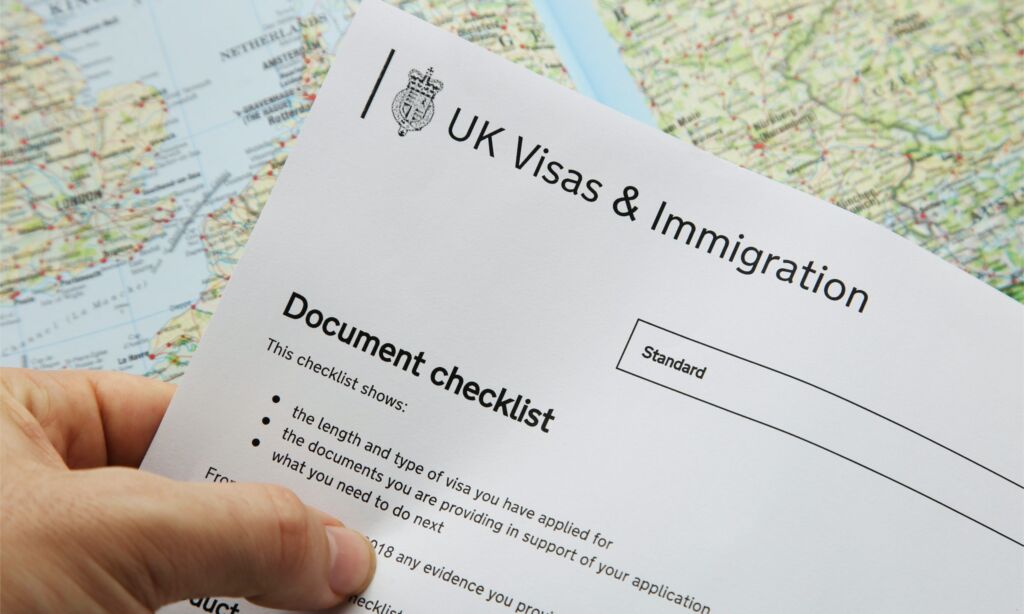
Documents you’ll need
When you apply you must provide:
- a current passport (with a blank page for your visa) or other valid travel document
- evidence that you can support yourself during your trip, for example bank statements or payslips for the last 6 months
- details of where you intend to stay and your travel plans – you should not pay for accommodation or travel until you get your visa
- evidence that you’ve paid your course fees or have enough money to pay them
You also need to provide:
- your tuberculosis (TB) test results, if you’re from a country where you have to take the TB test
- contact details for at least one parent or guardian in your home country, if you’re under 18 years old
- a certified translation if any documents are not in English or Welsh
Documents about your course
You must provide written proof of the course you’re studying. For example, a letter of acceptance from the educational institution stating the course’s name, duration and cost (including accommodation).
You may need to provide additional documents depending on your circumstances, such as evidence of your:
- permission to be in the country you’re applying from (if you’re not a national)
- financial sponsor’s occupation, income, savings or funds that will support your studies
If you’re under 18
If you’re under 18 you need to provide additional documents if:
- you’re travelling on your own
- you’re travelling with someone who is not your parent or guardian
Travelling on your own
You can travel to the UK without an adult (someone 18 or older).
You must have written consent from both parents (or one parent if they have sole responsibility) or your legal guardian. This must confirm they consent to:
- your visa application
- your living arrangements and care in the UK
- your travel to the UK
They also need to provide proof that you have somewhere suitable to live during your stay in the UK, including:
- the name and date of birth of the person that you will be staying with
- an address where you will be living
- details of your relationship to the person who’ll be looking after you
- consent in writing so they can look after you during your stay in the UK
Your parent, guardian or school must tell the relevant local authority about your visit if either of the following are true:
- you’re under 18 and have a disability
- you’re going to be looked after for more than 28 days by someone who is not a close relative (called ‘private foster care’)
You should provide a reply from the local authority if you have one.
Travelling with an adult
If you travel to the UK with an adult (someone 18 or older), you need to identify them in your visa application.
Their name will appear on your visa, and you’ll be refused entry to the UK if you arrive in the UK without them.
You can identify up to 2 adults in your visa application, and your visa will only be valid if you travel with at least one of them.
The adult can apply for a visa at the same time, but you must each complete separate applications.
